A Reflection on the UK’s Parliamentary Reaffirmation to Bolster Economic, Security & Develop Strategic Ties with Taiwan

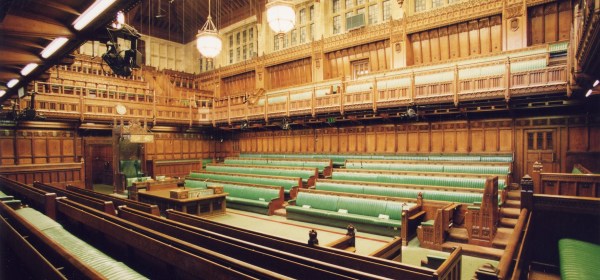
Written by Raian Hossain. Most importantly, the debate at the House of Commons has highlighted a strong unity among different political parties’ parliamentarians in bolstering ties with Taiwan in all possible ways, be it economic, helping the island in international recognition, along with ensuring peace, security, and stability across the Taiwan Strait region. The cross-party unity approach ensures much more robust ties between UK-Taiwan in the upcoming days despite which party forms government in London in future.

How a Discursive Shift Signals the Presence of a New Liberal, Progressive Taiwan in British Foreign Policy Conceptions

Written by Max Dixon. A debate in the House of Commons on February the 10th saw the emergence of a qualitatively divergent discourse on Taiwan within British politics. The motion, which all parties support, saw Alicia Kearns MP calling for tangible action from the government on UK-Taiwan relations. However, more important than the specific requests made was the nature of the debate and the language used within it to address Taiwan’s relationship to the UK and China.

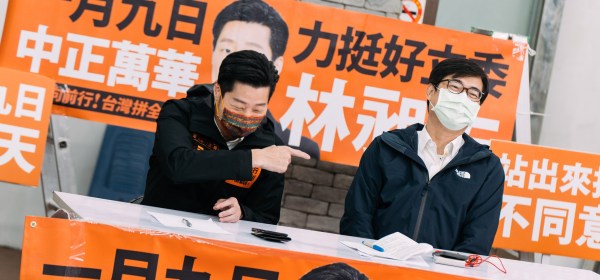
The Political Implications of Freddy Lim’s Recall Election

Written by Chieh-Chi Hsieh. In brief, the two ballots may be conveying a down-spiralling trajectory of KMT’s popularity and supporting rate. Yet, by observing the DPP government’s actions in the respective campaigns of Lin and Lim, one can explain the diverging results of the elections. Moreover, with pan-Green media (e.g. political talk shows broadcasted on 3 Set News, Formosa TV network) continuing to focus on Lu’s actions and connections with Yen after the by-election, it makes apparent that pan-Green groups have already begun their preparations for the 2022 local elections later this year.

The KMT, Ethnic Chauvinism, and the Freddy Lim Recall

Written by Michael A. Turton. Of course, ethnic chauvinism is not the only reason for the two recalls but given how rightist politicians spearheaded the recalls, it obviously played a role. Chen and Lim’s energetic, intelligent, self-aware Taiwaneseness was obviously provoking for a colonial elite whose ideological heart contains a powerful streak of racism and ethnic chauvinism directed at other ethnicities in Taiwan. Hopefully, discussions of Taiwan politics will shed more light on this key shaper of KMT attitudes toward Taiwan, and Taiwanese attitudes toward the KMT, especially among the young.

Taiwan’s New South Bound Policy 2.0: Fine-Tuning in 2022

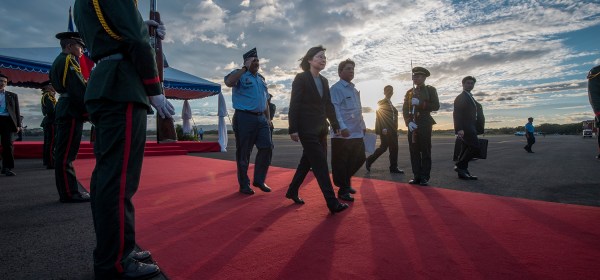
Written by Raian Hossain. Apart from South Asia, the role of cultural exchange between ROC and all New Southbound countries needs to be emphasised further. Exchange of cultural activities such as film or food (cuisine) festivals would be good to create bondage among the people of Taiwan and New Southbound countries. Also, environmental and climate change are pressing non-traditional security aspects that might create further cooperation ground between ROC and New Southbound countries. Like how the Tsai government is committed to domestic green energy, ROC should share such ideas and efforts among New Southbound countries

How did Malaysia and Taiwan respond to Covid-19? Part II: Pandemic’s Impact on Economy

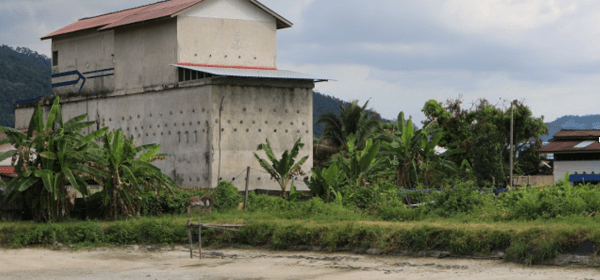
Written by K. Thiruchelvam. Our earlier article described how governments in Malaysia and Taiwan have responded to the challenges of the COVID-19 pandemic on their health systems. We identified common themes from both countries’ responses to the pandemic and acknowledged the importance of public sector capacities and capabilities in shaping and steering them. This second part of the article will describe how governments in Malaysia and Taiwan have responded to the challenges of the pandemic in their economic sector. 

How did Malaysia and Taiwan respond to Covid-19? Part I: Healthcare Infrastructure

Written by K. Thiruchelvam. Why have some countries responded to the COVID-19 pandemic more decisively than others? How have seemingly under-resourced countries performed better—in terms of the number of cases and fatalities—than their richer counterparts? These and other vexing questions have continued to confound many of us as we enter the third year of a pandemic that has brought governments all over the world to their knees. 

Taiwan and China: What Way Forward?Looking at Taiwan in its own light and its own right

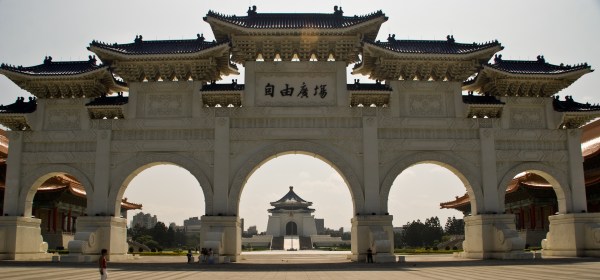
Tensions surrounding Taiwan have risen significantly. How will the situation develop in 2022? China has upped the ante by sending almost 1,000 aircraft into Taiwan’s ADIZ zone in the past year and by objecting to any moves by Taiwan to enhance its international relations. Furthermore, just the past weekend, China sent 39 aircraft into Taiwan’s Air Defence Identification Zone (ADIZ) in one day, Sunday, January 23rd, followed by 13 aircraft on Monday.

Democratic consolidation or political populism? A reflection on the 2021 recall elections in Taiwan

Written by Li-Ning Chen. olour of KMT) camp would like to exploit the ‘hard-earned’ victory after the disastrous loss of the 2020 presidential election and the mayoralty. Meanwhile, for DPP, taking a backseat and wishing the whole thing would blow away with time was no longer feasible, since the ‘revenge recall’ (報復性罷免) campaign began to look like potential political guerrilla warfare.

Taiwan’s Migrant Workers Versus Labour Brokerage System 

Written by Huynh Tam Sang and Wen-Chin Cheng. Taiwan’s labour brokerage system has made migrant workers vulnerable to a myriad of untransparent fees. Under the current system, migrant workers must pay hefty fees, including service fees and related pre-employment fees for migrant labour agencies or brokers, adding up to the total amount ranging from NT$60,000 to NT$200,000. To make matters worse, the current system has allowed brokers to charge migrant workers a monthly recurring fee, from NT$1,500 to NT$1,800. The “service fee”, according to Taiwan’s Ministry of Labour, is used to arrange work and daily life for migrant workers. However, brokers or agencies charge employers “very few or no fees”, shifting the disproportionate financial burden onto migrant workers.

1 40 41 42 43 44 93