Taiwan and China: What Way Forward?Looking at Taiwan in its own light and its own right

Tensions surrounding Taiwan have risen significantly. How will the situation develop in 2022? China has upped the ante by sending almost 1,000 aircraft into Taiwan’s ADIZ zone in the past year and by objecting to any moves by Taiwan to enhance its international relations. Furthermore, just the past weekend, China sent 39 aircraft into Taiwan’s Air Defence Identification Zone (ADIZ) in one day, Sunday, January 23rd, followed by 13 aircraft on Monday.

Democratic consolidation or political populism? A reflection on the 2021 recall elections in Taiwan

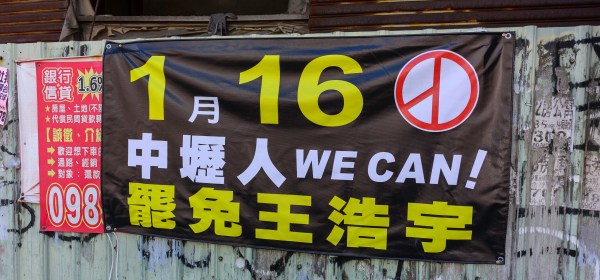
Written by Li-Ning Chen. olour of KMT) camp would like to exploit the ‘hard-earned’ victory after the disastrous loss of the 2020 presidential election and the mayoralty. Meanwhile, for DPP, taking a backseat and wishing the whole thing would blow away with time was no longer feasible, since the ‘revenge recall’ (報復性罷免) campaign began to look like potential political guerrilla warfare.

Taiwan’s Migrant Workers Versus Labour Brokerage System 

Written by Huynh Tam Sang and Wen-Chin Cheng. Taiwan’s labour brokerage system has made migrant workers vulnerable to a myriad of untransparent fees. Under the current system, migrant workers must pay hefty fees, including service fees and related pre-employment fees for migrant labour agencies or brokers, adding up to the total amount ranging from NT$60,000 to NT$200,000. To make matters worse, the current system has allowed brokers to charge migrant workers a monthly recurring fee, from NT$1,500 to NT$1,800. The “service fee”, according to Taiwan’s Ministry of Labour, is used to arrange work and daily life for migrant workers. However, brokers or agencies charge employers “very few or no fees”, shifting the disproportionate financial burden onto migrant workers.

Memes and Milk Tea Alliances: Ludic activism in Taiwan in 2021

Written by Genevieve Leung. The Milk Tea Alliance was formed when Mainland Chinese social media users attacked two Thai celebrities to support pro-democracy protesters in Hong Kong and Taiwan independence activists. Thai social media users deployed humour to combat the attacks, and Taiwan and Hong Kong users joined in, using the shared custom of drinking milk tea, along with various minoritized statuses, as the cohesive forces that “naturally” drew them together.

Will the TPP Suffer the Same Fate as the NPP?

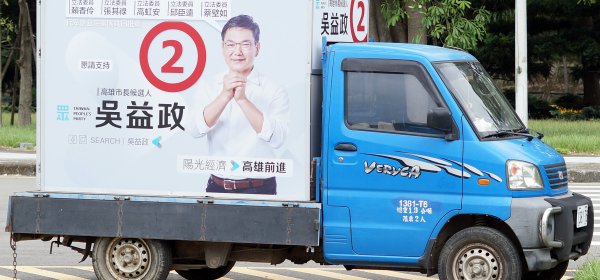
Written by Brian Hioe. There have been some suggestions that Ko might next seek to run for mayor of Taoyuan or Kaohsiung if a presidential bid seems remote. Beyond Ko’s Taipei mayoral term, however, it is a question as to whether the TPP’s politicians are sufficiently well-known for the party to continue without Ko fronting it in one of Taiwan’s most powerful local government positions. 

One Democracy, Two Interpretations: Making Sense of China’s Response to the Summit and Implications for Taiwan

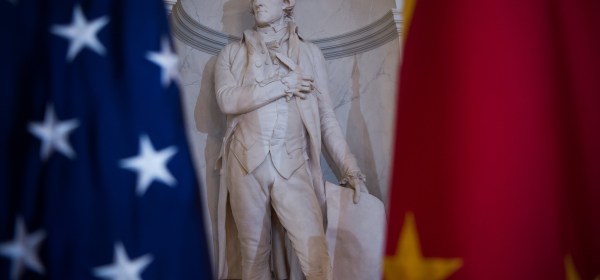
Written by Yu-Hua Chen. China’s relationship with the liberal international order (LIO) has evolved over the decades. China gradually transformed itself from an order opponent in the Mao era to an order beneficiary in the Deng era to an order reformer in the Hu era. China has mixed feelings toward the LIO built and led by the United States at the end of World War II. On the one hand, leaders in Beijing know that the LIO is the foundation of China’s power and wealth today. Without the United States engaging China by bringing it into this order, the rise of China would have been impossible.

What the December 18th Referendum Means for U.S.-Taiwan Relations

Written by Milo Hsieh. On December 18th, Taiwanese voters headed to the polls to vote on four key referendum topics. They rejected all four referendum proposals in a close but decisive vote. The votes were held on four topics, each of which were put forth by an opponent to a policy change pushed by the Tsai administration. Voters were asked explicitly whether they support: 1) Restarting Taiwan’s defunct fourth nuclear power plant, 2) Rejecting imports of U.S. pork containing Ractopamine, 3) Tying referendums to future national elections or leaving them as separate votes, 4) Rejecting the ongoing construction of a light natural gas ship dock in Taoyuan.

Affective Polarized Elites and Rational Voters in Taiwan

Written by Yu-tzung Chang. Adam Enders, an Assistant Professor from University of Louisville, published a research paper in the Journal of Politics this year (2021). Comparing the degree of affective polarization between the political elite and the masses in the U.S., he found out that the political elites’ affective polarization is higher than the general public, and meanwhile the affective polarization is more diverge than ideology. The affective polarization of the Americans is becoming more and more revealing in current political environment.

The Good, the Bad, and the Ugly: Issues Concerning the Referendum

Written by Ian Inkster. What may turn out to be the most distinguishing characteristic of the referendums is that none of them directly address the economic catastrophes rendered by the ongoing pandemic. In large capitalist nations elsewhere, especially in the West – not so visible in, say, Japan or anywhere east of the so-called Middle East – the debate on economic futures is primarily centred on anglophone and European concerns. The pandemic in most nations has accelerated debates and deepened the divides concerning employment, technological change, and social outcomes of government policies. In particular, the big question is back to the future: How can workers improve their conditions (from no-contract employment through to spasmodic multiple tasking) and how can or should policymaking contribute?

Taiwan’s Referendums Defeated: A Win for Democracy, International space, and the Environment

Written by Gerrit van der Wees. On Saturday, 18 December 2021, the Taiwanese people went to the polls to vote on four referendums supported by the opposition KMT and opposed by the ruling DPP of President Tsai Ing-wen. The result was a sound defeat of all four proposals and a significant win for the policies of President Tsai. Below is an analysis of what happened.

1 41 42 43 44 45 94