Taiwan and Twiplomacy

Written by Najee J Woods. Twitter has been instrumental for Taiwan digging out of the tunnels of diplomatic isolation. Twitter has become the equivalent to an online megaphone for the international community to hear what the Taiwanese people have to express. Political parties, news organisations and influential Taiwanese politicians are now on twitter, which gives the world community a glimpse of the different viewpoints that make up Taiwanese society. Formosa is no longer the forgotten orphan, as President Tsai and her team have successfully tweeted Taiwan back into the global community where it belongs.

Left Perspectives on Connecting Taiwan to the International World: How New Bloom Magazine was Founded

Written by Brian Hioe. New Bloom Magazine, which is approaching its sixth anniversary, was originally founded in 2014 in the aftermath of the Sunflower Movement. Other founders of the publication and myself were participants in the Sunflower Movement, and we first began talking about the need to found a bilingual publication to connect Taiwan to the international world in April, which was around the time of the withdrawal from the Legislative Yuan. The publication subsequently launched in July 2014.

US Congress passes Act in Support of Taiwan’s Diplomatic Alliances

Written by Gerrit van der Wees. On March 4th, 2020, the US House of Representatives passed the TAIPEI Act with unanimous consent. TAIPEI, in this case, stands for “Taiwan Allies International Protection and Enhancement Initiative” – a smart acronym for legislation designed to support more international space for Taiwan around the world. The US Senate had passed a similar Bill at the end of October 2019, and the House actually took up the Senate version of the Bill.

How Taiwan Used Big Data, Transparency and a Central Command to Protect Its People from Coronavirus

Written by Beth Duff-Brown. Within the last five weeks the Taiwan epidemic command center rapidly implemented those 124 action items, including border control from the air and sea, case identification using new data and technology, quarantine of suspicious cases, educating the public while fighting misinformation, negotiating with other countries — and formulating policies for schools and businesses to follow.

A Political Gamble: Taiwan’s Kinmen Island and the Decision of Supporting the Central Government’s Coronavirus Prevention Measures

Written by Shun-Te Wang. As Chinese influence infiltrates everyday life in Kinmen, local politicians still find it challenging to predict local opinion over border control issues. In early February 2020, 6 kilometres away from China, a dissatisfaction toward the government’s Coronavirus prevention measures became prominent on the Kinmen island. The island’s public demand that Taiwanese central government, which is 300 kilometres away from Kinmen, to suspend the “Three Links” to prevent the Coronavirus disease 2019 (COVID-19) from entering.

A State-based World Health Organisation: The Taiwan Paradox for Global Pandemic Governance

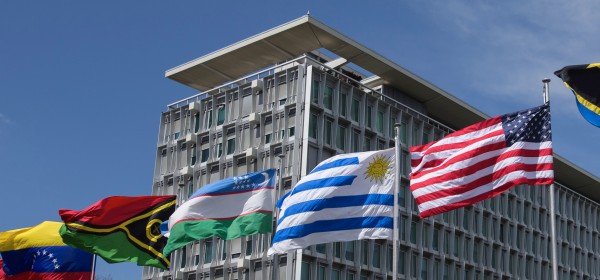
Written by Po-Han Lee. Due to the recent outbreak of the new coronavirus (COVID-19), Taiwan—which is greatly affected because of its intensive communication with China—has come under the international spotlight, because of its exclusion from the World Health Organisation (WHO), which is the largest institution responsible for disease control. Drawing on the rules/practices regarding the WHO-related meetings, this essay discusses why it is so difficult for the Taiwanese to be heard by the WHO, let alone for them to be present at relevant forums.

Disease in the Digital Era – is Taiwan in the midst of an “infodemic”?

Written by Sam Robbins. The coronavirus has become a hot topic of conversation on Taiwan’s popular social networking site, D-cart. This has become a space for (primarily university students) to share or ask for relevant information about the disease, but also to share their fears and difficulties that have resulted from the virus. A recurring theme on the discussion board are stories from international students—for example, from Hong Kong—who are not sure of their ability to return to study in Taiwan.

Reaching out to Undocumented Workers: The Best Way to Contain COVID-19 Outbreak

Written by Hong-zen Wang, Pei-chia Lan, Yen-fen Tseng, Chia-ling Wu, Chiung-chih Chen. On 26th February 2020, Taiwan Centre for Disease Control (CDC) announced that there had been 32 confirmed cases of infection in Taiwan. Case #32 was unknowingly infected when she was employed as the caregiver for Case #27 during the latter’s hospitalisation. After the CDC disclosed her identity as an ‘illegal’ Indonesian migrant worker, public fears surged; consequently, several county governments announced that they would tighten the measures and crackdown on undocumented workers.

Can Migrant Workers Purchase Face Masks with Their Photo IDs?

Written by Ying-da Wong. The government seemed to take it for granted that all citizens and foreign residents are issued with an NHI Card, and that their NHI Card is valid. As a matter of fact, as detailed below, there is a wide gap between this presumption and reality. This gap may affect people’s rights or adversely curtail the effectiveness of disease prevention. So, before I move on, a fundamental question must be asked: are migrant workers entitled to the NHI, and are they issued with an NHI Card?

How is Taiwan Facing the Coronavirus?

Written by Josie-Marie Perkuhn. As a precaution, most flights have been suspended, and entry spots have restricted access, such as maritime passages via Kinmen, Matsu or Penghu Island. President Tsai also assured that “as long as the two sides fully communicate and cooperate, I do believe that we will be able to take good care of our people”. However, controversy arose when on February 3rd evacuees arrived. Three of the 247 people on the charter flight had not been on the priority list, which Taiwan provided to China, and one was tested positive, becoming the 11th patient in Taiwan to be diagnosed.

1 96 97 98 99 100 134