Listening for the Songs of Home: Tracing the Unheard Vietnamese Soundscape in Taiwan

Written by Kuo Ta-Hsin. This piece introduces the Vietnamese presence in Taiwan, through different sonic performances, to link Vietnamese students and/or migrants closer to their home. It is just for instance, In the karaoke rooms and Vietnamese eateries of Taichung, memory meets reality. Voices turn into acts of belonging, and to sing is to remain Vietnamese, even far from home.

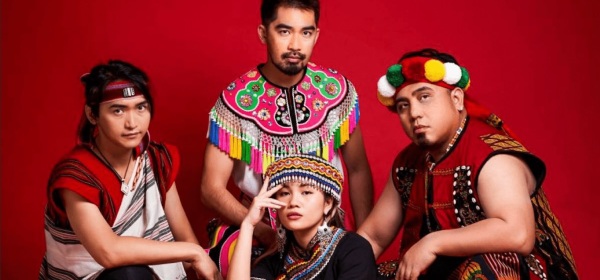
Singing for the Mountain Lands: A Pivotal Indigenous Music Concert in Taiwan

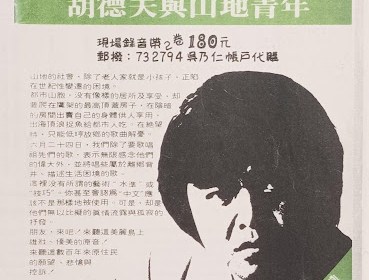
Written by Eric Scheihagen. The author illustrates the 1984 Singing for the Mountain Lands concert in Taipei, organised shortly after the Haishan Coal Mine Disaster, which killed mostly Amis miners. It details how Indigenous musicians and activists, led by Hu Defu, used the concert to raise funds and publicly address discrimination, harmful stereotypes, and political issues. The event became an important milestone in Taiwan’s growing Indigenous rights movement and helped catalyse later organising efforts, including the formation of the Taiwan Association for Promoting Indigenous Rights.

Indigenous popular music and language revitalisation in Taiwan 

Written by Karen Huang. In 2020, Paiwan singer Abao (阿爆) became an overnight sensation at the 31st Golden Melody Awards (GMA) when her Paiwan album ‘Kinakaian MOTHER TONGUE’ brought home multiple major awards, including the ‘Album of the Year’ and ‘Song of the Year’. The awards surprised many, as Mandarin popular music usually dominates these two cross-language categories. It was the first time an Indigenous-language singer had won both categories simultaneously.

#MeToo in Taiwan’s Music Industry: After Making Waves, Can We Forge a Better Workplace?

Written by Chen-yu Lin. In 2023, a watershed moment emerged in Taiwan’s #MeToo movement with the resounding success of the Netflix series “Wave Makers.” The show’s resonance was profound, shedding light on sexual harassment and abuse in the workplace. This spotlight inspired survivors from politics, education, arts, and entertainment to break their silence. The waves of #MeToo allegations have not spared Taiwan’s music industry.

Han-Heterosexual-Male Supremacy across the Pacific? A Critique of The Taiwanese Reminiscence Acrobatic Show

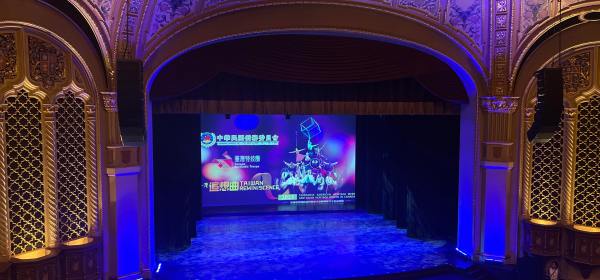
Written by Mark Hsiang-Yu Feng. Busy as usual was Highway number eighty, but Mother’s Day made downtown San Jose unexpectedly quiet. However, in front of the California Theatre, lively chat sounded out of the silence, marking this celebratory moment for the twentieth anniversary of the Taiwanese American Center of Northern California during Asian and Pacific Islander heritage month. Families came to fill most of the seats, and three languages—Hoklo Taiwanese, Taiwanese Mandarin, and English—were spoken to express the identity of these participants. To honour the culture of Taiwanese and Taiwanese Americans, the overall narrative of Taiwanese Reminiscence contextualises a mixture of stunts, acrobatic movements, and dance into a condensed representation of the twentieth history of Taiwan.

Triangulating the Taiwanese Spirit in Southern California: Colonial Hauntings at the 228 Commemorative Concert

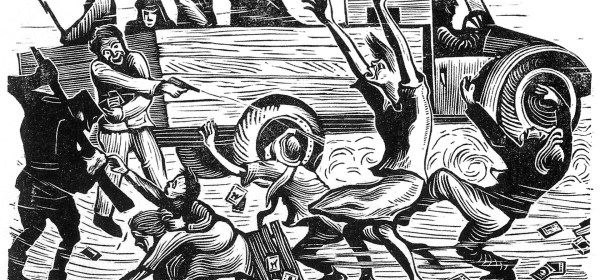
Written by Chun Chia Tai. In February, I saw a text message in a Taiwanese group chat promoting a concert commemorating the 228 massacre caused by the Kuomintang dictatorship in Taiwan on February 28th, 1947. The concert was called The Spiritual Day of Taiwan: 2-28 76th Commemorative Concert and was hosted by two Taiwanese American organisations: the Taiwanese United Foundation and the Taiwan Elite Alliance, since 2007. The performers were mainly Taiwanese. Many of them were not professionals but members of local Taiwanese church choirs. Most of the audience was familiar with the songs being performed; therefore, they sang along with the performers.

Touring Indigenous music from Taiwan in Canada—the lessons of Kanatal

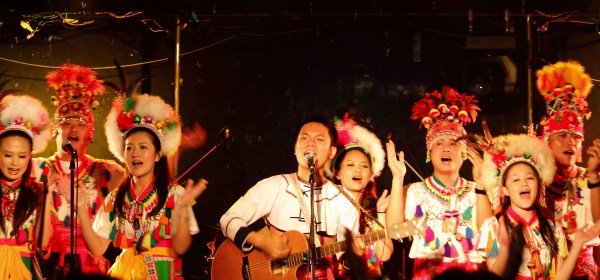
Written by Charlie Smith. Last September, when the band Kanatal walked onto the stage in front of the Vancouver Art Gallery, it marked a milestone. This was the culmination of the first Canadian tour by a group of Indigenous musicians from Taiwan. After performing in several Canadian cities, the four members—guitarist Masaw Ali, keyboard player Suana Emuy Cilangasay, singer Abus Tanapima, and drummer Vangacu Kalevuwan—were eager to impress a crowd that had gathered for the signature event of TAIWANfest Vancouver. 

Where did the Greatest Art Piece Come From? From Taiwan’s Music Industry to Jay Chou’s Latest Album 

Written by Dr Chen-Yu Lin. his strategy to project Chineseness as a globalising project was best exemplified by Jay Chou’s appearance on the Nasdaq screen at Time Square in January 2019. He was voted the most influential Chinese singer on Kugou (酷狗), the Chinese streaming service owned by Tencent ( 騰訊). However, other than his name, the text shown on the Nasdaq screen alongside a photo of Chou is all in Chinese. Such a projection of a globalising Chineseness caters to the hopes of the well-educated and well-travelled Chinese newly rising classes.

A Possible Cultural-Political Alliance to Address Concurrent Struggles between Taiwan and Oceania: Music as a Means

Written by Chun Chia Tai. For many Indigenous peoples in Taiwan, music is a lively cultural medium that facilitates allying with other Austronesian peoples residing in Oceania. Such a musical way of fostering cultural diplomacy has currently been popular in Taiwan, especially after the release of the album Polynesia in 2014, emphasising the shared cultural genealogy of Austronesian under the collaboration of an Amis singer Chalaw Pasiwali and a Madagascar musician Kelima. In the same year, another project called the Small Island Big Song aimed to establish a network between Pacific Islands and Taiwan through music and film. Musicians in this project released their 2018 album Small Island Big Song and a sequential album named Our Island in 2021. Moreover, all these musical works focus on fusions of traditional folk music(s). Positive public perception reflects Taiwanese people’s rising demand for establishing a cross-Pacific Austronesian community between Taiwan and the Pacific Islands.

1 2 3 4