Taiwanese Horror Games and the Ghosts from the Past

Written by Chee-Hann Wu. Taiwanese horror (taishi kongbu) is a rising genre that has claimed an important space in Taiwanese popular culture, particularly in the video game industry since the debut of Detention in 2017. These video games often incorporate elements of Taiwan’s local religions, ritual practices, and mythologies, especially the ones associated with ghosts and other supernatural beings. Although mostly implicit, many Taiwanese horror games contain hints of historical references to the 228 Incident and the White Terror under Martial Law. Malevolent monsters and ghosts become physical incarnations of state-sanctioned violence by perpetrators and accomplices and the suffering of those who were arrested, executed, or silenced. 

How Much Money Could Ghosts Make? A Case Study on the Most Ferocious Female Ghost of Taiwan – Chen Shou Niang  

Written by Yi-Ping Wu. Staying at home, not going to the beach, or climbing mountains, and not even opening an umbrella indoors are just a few taboos everyone must remember when Ghost Month 鬼月 arrives. Although the origin of the concept of Ghost Month is uncertain, the Taiwanese still emphasize the rituals that must be practised and the taboos that must be prohibited during this period. What attracts our attention most is the colossal amount of money that the Taiwanese pay for the rituals, offerings, and joss paper (paper money) to honour their ancestors because their past loved ones could return to the world of living since the gate of the underworld would open on the first day of July on the lunar calendar. The huge income that the cultural concept of Ghost Month contributes reminds us of an interesting question to think about thoroughly: How much money the “ghosts” could make?

Leveraging Cultural Exports for Resilience: Insights from Taiwan and South Korea

Written by Tommy Hall and Margaret Siu. Global discussions about Taiwan often focus on an invasion scenario, and many observers wonder if Taiwan is adequately preparing for war. These discussions often dissect Taiwan’s hard power—military and economic factors that may dissuade Beijing. However, soft power is crucial in conflicts between imbalanced parties. Current discussion would benefit from diversifying outside hard power calculations and examining Taiwan’s soft power. Taiwan should apply lessons from South Korea’s model to bolster its ability to co-opt global support. Describing Taiwan’s soft power vision and comparing both nations’ top-down cultural promotion efforts is helpful.

A Possible Cultural-Political Alliance to Address Concurrent Struggles between Taiwan and Oceania: Music as a Means

Written by Chun Chia Tai. For many Indigenous peoples in Taiwan, music is a lively cultural medium that facilitates allying with other Austronesian peoples residing in Oceania. Such a musical way of fostering cultural diplomacy has currently been popular in Taiwan, especially after the release of the album Polynesia in 2014, emphasising the shared cultural genealogy of Austronesian under the collaboration of an Amis singer Chalaw Pasiwali and a Madagascar musician Kelima. In the same year, another project called the Small Island Big Song aimed to establish a network between Pacific Islands and Taiwan through music and film. Musicians in this project released their 2018 album Small Island Big Song and a sequential album named Our Island in 2021. Moreover, all these musical works focus on fusions of traditional folk music(s). Positive public perception reflects Taiwanese people’s rising demand for establishing a cross-Pacific Austronesian community between Taiwan and the Pacific Islands.

Comic Fandom Culture in Taiwan: How It All Started.

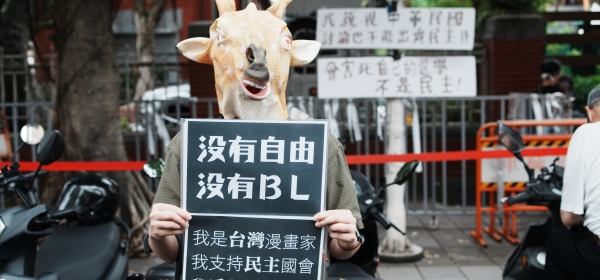
Written by Hui-Hua Lu. The comic and animation fan culture in Taiwan may have started by accident, but now it is lively and energetic with comic conventions and online platforms that offer spaces for people to participate and a channel to express themselves. The fan culture in Taiwan started around the 1990s when 大然出版社 (Da Ran Publishing) in Taiwan first added the comics created by Japanese fans of Saint Seiya (聖鬥士星矢, sheng doushi xingshi in Chinese, 聖闘士星矢, セイントセイヤ in Japanese) at the end of their publications of the same comics.

Eggplantegg: Taiyu Language Proliferation and Linguistic Diversity in Taiwan’s Popular Music Scene

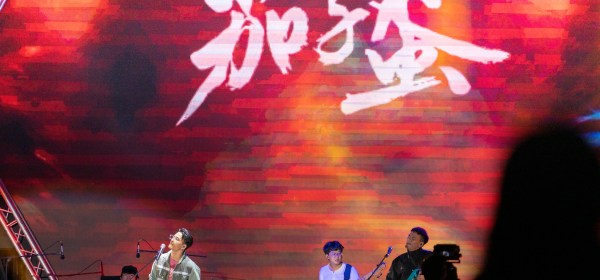
Written by Max Lembke-Soh. EggPlantEgg 茄子蛋 has fast become a significant player. Rocketing to popularity in 2017, EggPlantEgg received multiple Golden Melody Awards and nominations recognising their distinctly Taiwanese vibes, making full use of Taiyu’s broad intonation range to melodise lyrics across a variety of sounds. The band has no shortage of commentators lauding their style, highlighting their passionate use of Taiyu to express everything from love and yearning to relationships and loss.

Confessions from a Former Fan Girl

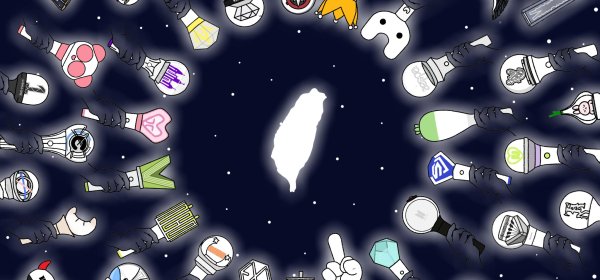
Written by Ellie Koepplinger. I remember being thirteen with vivid clarity. You are at once gangly, disproportionate, and uncomfortable with yourself, confused and delighted in equal measure by your budding independence. You are constantly trying to untangle a knotted web of hormones, education, and friendships, convinced that one poor decision would permanently impact the chasm of life that stretched before you. At that tender inflexion point, falling in love with fictionalized Taiwanese pop idols was the one thing that kept me grounded.

Jay Chou’s China Wind Pop Made in Taiwan and Its Transnational Audiences

Written by Chen-yu Lin. It is evident that “being Chinese” today can influence both music production and perceptions. The chapter argues that the construction and perception of Chineseness through popular music is multidimensional, whether the investigation concerns a China Wind song or a person’s experience of it. It also further explores other dimensions to be considered alongside the sonic journey music provides.

City Pop in Taiwan: old mainstreams becoming new indies

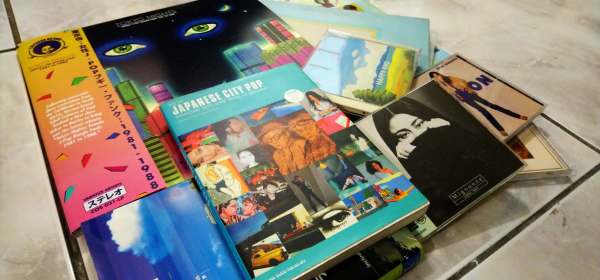
Written by Yan-Shouh Chen. As City Pop become more known to Taiwanese indie music lovers, unveiling J-pop history might not be enough. Some fans turned their eyes toward Taiwanese artists that are good at creating groovy melodies. These artists might consider themselves as R&B and Hip Hop rather than City Pop, but the boom did them a favour, and now the spotlight is on them.

Breakthrough the thinking of “indigenous music” as a style of music

Written by Kuing, GuoTing Lin. Music is in full blossom in Taiwan, as evidenced by the vibrant contemporary Taiwanese music being produced by its indigenous musicians, which has spurred a rich cultural dialogue surrounding their production. Thus, in 2019 a diverse indigenous subjectivity has begun to enter the Taiwanese pop music market through new albums. Hence, it is worth exploring how this phenomenon differed from previous eras when albums were dominated by indigenous languages, and what this new phenomenon offers regarding a reflection of indigenous cultural consciousness.

1 2 3