In the Wake of Taiwan’s January 2020 Election, how are Cross-Strait Relations?

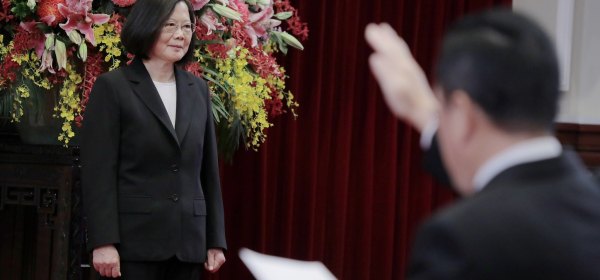
Written by John F. Copper. In January this year, Taiwan held a key national election. The Democratic Progressive Party’s (DPP) president, Tsai Ing-wen, won reelection while the DPP kept its majority in the national legislature. It was an across-the-board victory for the pro-independence party. Fast forward to autumn, nine months later. How does Taiwan look politically? Not much different! Reassessing campaign policies and reality-checking that usually follow a big election have been mostly missing.
The implication of U.S. Strategic Ambiguity and China’s growing military capabilities for Taiwan

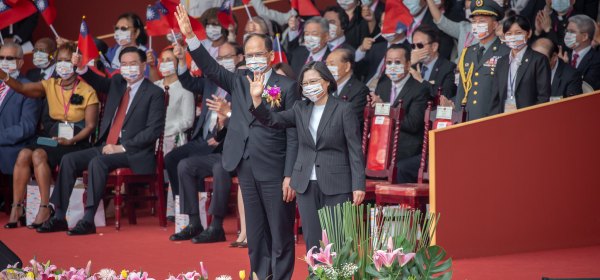
Written by Joseph Bosco. Tsai Ing-wen, Taiwan’s brave and calmly inspirational president recently addressed the rising military threat from Communist China. She noted that Beijing’s crackdown on Hong Kong now puts Taiwan “on the front lines of freedom and democracy.” Recognizing that what is at stake is not only Taiwan’s own political independence and security, but a major front in China’s existential challenge to the rules-based, Western values-oriented international order, Tsai pledged that Taiwan would carry its share of the democratic burden.

Can Tsai Ing-wen Avoid the Second Term Curse?

Written by Kharis Templeman. If Tsai Ing-wen is superstitious, she should be worried: second term presidents in Taiwan appear to be cursed. Much like President Tsai, her predecessor Ma Ying-jeou started his second term on a confident and triumphant note. But over the next four years, he faced a relentless series of political crises, including an intraparty power struggle with Legislative Yuan Speaker Wang Jin-pyng, massive protests against the death of a military conscript and construction of a nuclear power plant, and of course the Sunflower Movement occupation of the legislature, which effectively halted cross-Strait rapprochement with Beijing.

Is Taiwan Becoming a One-party Dominant System?

Written by Yu-tzung Chang. Many people have begun to worry that as with the Liberal Democratic Party in Japan, the DPP will hold power for a long time in the future, and Taiwan will become a dominant one-party system. There are three reasons why I think this is unlikely. First, although the national identification cleavage has waned, new controversies are continually emerging, including same-sex marriage, health insurance premiums, and environmental protection, making Taiwan a typical pluralistic society. Politicians must find ways to bring together various “minority views” and assemble a “majority force” to win elections.

Tsai’s Second Term and Rethinking Lee, Chen and Ma

Written by Mark Wenyi Lai. What will President Tsai Ing-wen do in her second term? To answer this question, this essay reviewed three previous Taiwanese Presidents’ second terms and attempted to assess how Tsai and Taiwan politics operate in 2020-2024. Tsai is the most formidable Taiwanese President of the last thirty years. Her unprecedented political clout contributes to seven explanations as to why this is the case.

Han Revoked: Wither the Kuomintang?

Written by Chieh-chi Hsieh. On 6 June 2020, Kaohsiung Mayor Han Kuo-yu suffered a devastating defeat in the recall election with almost 940,000 ballots agreeing to remove him from office after just 18 months since his inauguration. What are the underlying reasons for Han’s abrupt rise and fall over two years? What are the political implications of Han’s recall for not only the Kuomintang (KMT) but also the development of Taiwan’s democracy?

Power Dynamic Reshuffles in the Green and Blue Camp Following Tsai’s Re-election

Written by Milo Hsieh. In January, Taiwan saw the re-election of its DPP President Tsai Ing-wen. The January election, which saw the DPP once more taking a firm majority in the Legislative Yuan, was a victory for the DPP that also gave rise to smaller parties. The KMT, taking lessons from its defeat, went on to reposition its policy on cross-strait issues with the election of a new party chairman.

Tsai’s Second Term and the Taiwan Strait: Greater Clarity, Same Challenges

Written by J. Michael Cole. The first four years under the Tsai Ing-wen administration have brought greater clarity regarding Beijing’s attitude toward Taiwan and its democracy. Although in the months prior to her inauguration on May 20, 2016, it was still possible to imagine that the two sides could find a modus vivendi despite Beijing’s longstanding antipathy toward the Democratic Progressive Party, Beijing almost immediately adopted an unforgiving course of action which soon poisoned the relationship.

President Tsai Ing-wen Post-Re-election: A Six-Month Report Card

Written by John F. Copper. Nearing the half-year point in her second term as president it is fitting to ask: how is President Tsai faring? It is a good time for a report card. On January 11, President Tsai won a resounding re-election victory over her KMT opponent Han Kuo-yu, the Mayor of Kaohsiung. Her party, the Democratic Progressive Party (DPP), also secured a majority in the concurrent legislative vote, though it was not as impressive as Tsai’s win

 A Commentary on President Tsai’s Inauguration Regarding Energy Policy

Written by Manuel Zehr. During her speech, President Tsai repeated and underlined her policy from four years ago. The Democratic Progressive Party’s (DPP) ultimate goal was always to win over voters by shutting down nuclear power plants in Taiwan. Besides keeping this former political promise, renewable energy has the positive side effect of reducing energy imports, which is currently at 97.8%. This is important as China could cut off economic and life support lines at any time.

Tsai Ing-Wen’s Inaugural Address for the Second Term: “Unprecedented Challenges and Unparalleled Opportunities”

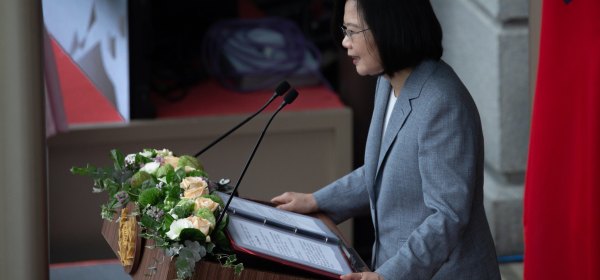
Written by Qi Dongtao. As usual, Tsai Ing-wen’s inaugural speech on May 20 maintained her low-key, down-to-earth style without much surprise. From Beijing’s perspective, since she did not explicitly accept the “one-China principle” in the speech, she failed Beijing’s so-called “exam” again and therefore was severely criticised by Beijing. But since Beijing had already concluded that she would never openly accept the “one-China principle,” her speech did not surprise Beijing.

1 2 3 4 5 7