
Written by Yi-Yu Lai.
Image credit by Hong-sui Lim.
One afternoon in 2011, Hong-sui Lim visited a Kaxabu village due to his participation in an anthropological camp. This marked his first encounter with the Kaxabu people, one of the Plain Indigenous groups inhabiting the Puli Basins in central Taiwan. Lim was astonished by the small number of Kaxabu elders who still speak their mother tongue, as it is commonly believed that Plain Indigenous peoples have been assimilated by Han Chinese culture and have lost their own languages and traditions. As a result, Lim returned to the Kaxabu communities as an undergraduate student to learn more about their endangered cultural heritage and began collaborating with the Kaxabu people.
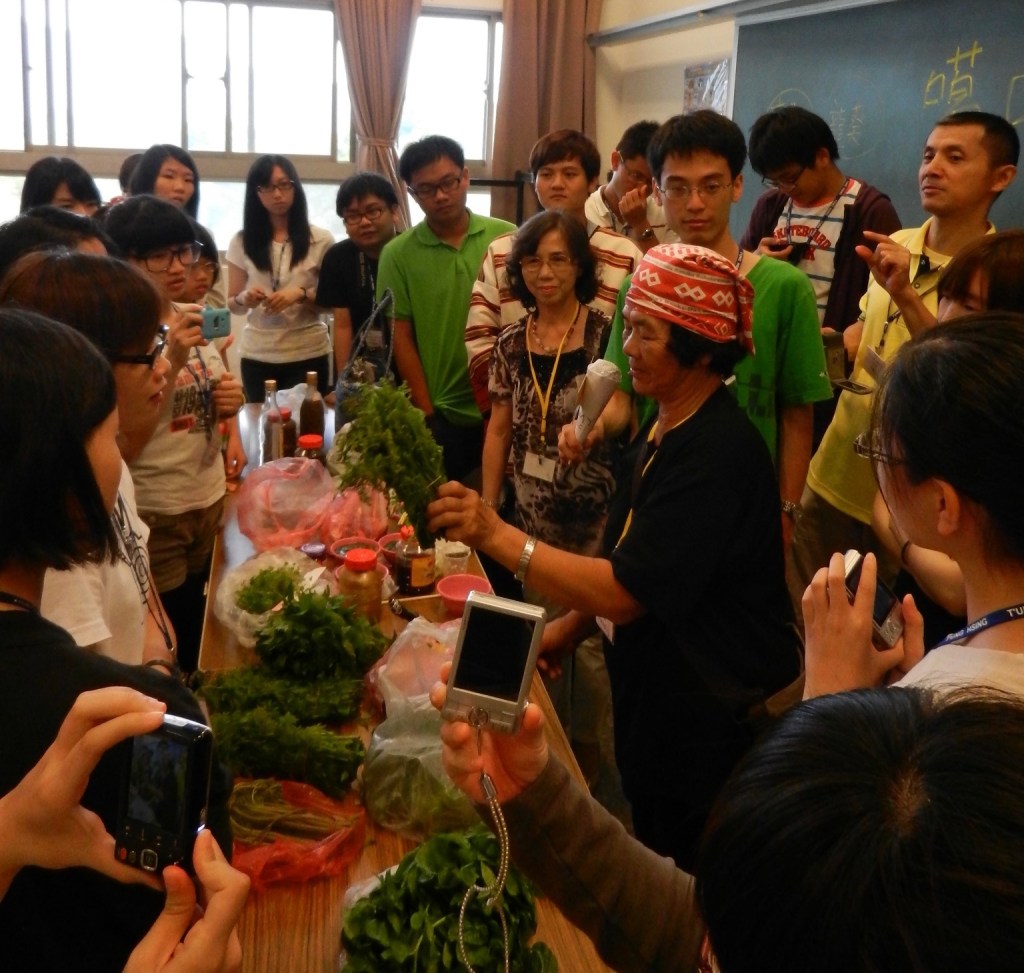
Lim took the initiative to organise a series of Kaxabu language workshops to invite the elders to train the youth to become seeding teachers. The activities included the discussion of Kaxabu traditions and histories, as well as the teaching of languages, chants, and songs. Teaching their native language was a novel experience for the elders, particularly since most of their students were from National Chi Nan University, which Lim also attended. Despite their lack of higher education, this opportunity allowed the elders to recognise the value and significance of their knowledge. In addition, Lim and the community members anticipated that more students from diverse backgrounds would inspire creativity and contribute to developing teaching materials to preserve the Kaxabu heritage.
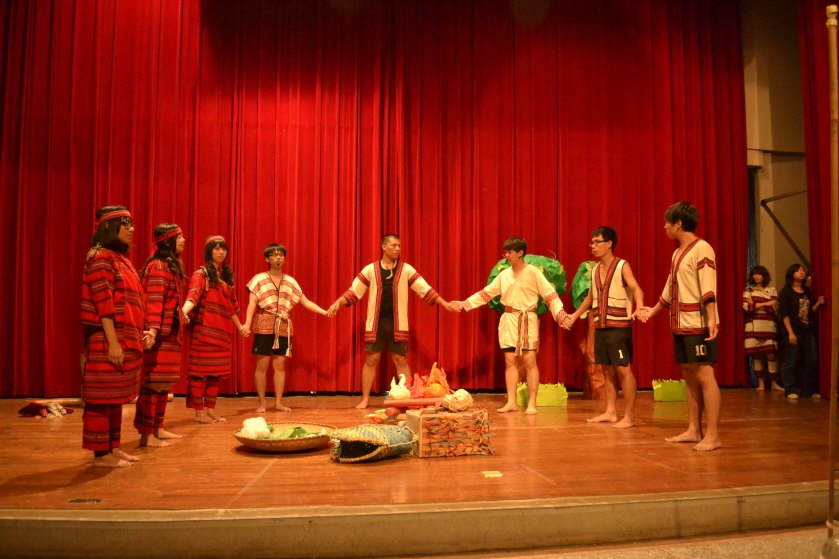
In 2012, a group of students performed a production named “The Kaxabu Youth” at National Chi Nan University. The play drew the attention of numerous community members as it was inspired and based on the rich language and legends of the Kaxabu people. Lim, the director of the production, explained that the purpose behind the theatrical production was to reach a wider audience and have a greater impact. Following the success of the workshops and the play, the initial project gradually expanded to encompass further documentation and cultural conservation projects. For example, Lim created three websites, including The Global Kaxabu Language Network, Fieldwork in Kaxabu, and Reference to Kaxabu Grammar, to document their fieldwork experiences and share the teaching materials with the public.
Making Indigenous Storytelling Happen in the Classroom
Over the past decade, Hong-sui Lim pursued his graduate studies in linguistics, focusing on preserving the Kaxabu language. He devoted himself to documenting the Kaxabu language corpus. Nevertheless, mindful of the earlier mentioned challenge, Lim aimed to make this corpus more accessible to the general public. He took steps to share his fieldwork recordings, Kaxabu grammars, and storytelling in an easily understandable and relatable manner. To facilitate this, the websites he previously created became valuable platforms to house these materials, and they served as a remarkable resource for sharing the Kaxabu language and its cultural heritage.
After becoming a lecturer at the University, Lim began to incorporate his experiences and the materials he had gathered into his classroom teachings. Meanwhile, he also directed his attention to other Plain Indigenous communities residing in the Puli Basins, which served as a refuge for these communities due to the encroachment or pressures imposed by Chinese settlers, and later as the home for many of these groups in central Taiwan since several centuries ago. This feature and the location of the University prompted him to extend his efforts beyond the Kaxabu community and advocate for the preservation and revitalisation of the cultural heritage of several Plain Indigenous groups in the region.
In the past few years, Lim collaborated with assistant professor Jui-Yuan Li, who has been actively involved with the Pazeh communities in Puli. Together, they use the Chinese class for freshmen at National Chi Nan University as a venue to introduce Pazeh storytelling, aiming to inspire students to create their own productions using stories collected from the communities. While not all the students were Indigenous individuals, this initiative provided them with opportunities to broaden and deepen their understanding of the local communities nearby the University. In particular, their engagement with the communities and conversations with the elders allowed them to gain firsthand knowledge and insights into the rich cultural heritage present in the collected stories and the communities. Due to the students’ background diversity, they have produced hand puppetry shows, shadow puppetry shows, radio dramas, music videos, short films, paintings, picture books, table games, and 3D models. These productions were not only shown in the classroom but also in the respective Indigenous communities, and they have motivated more people to uncover more stories from the communities.
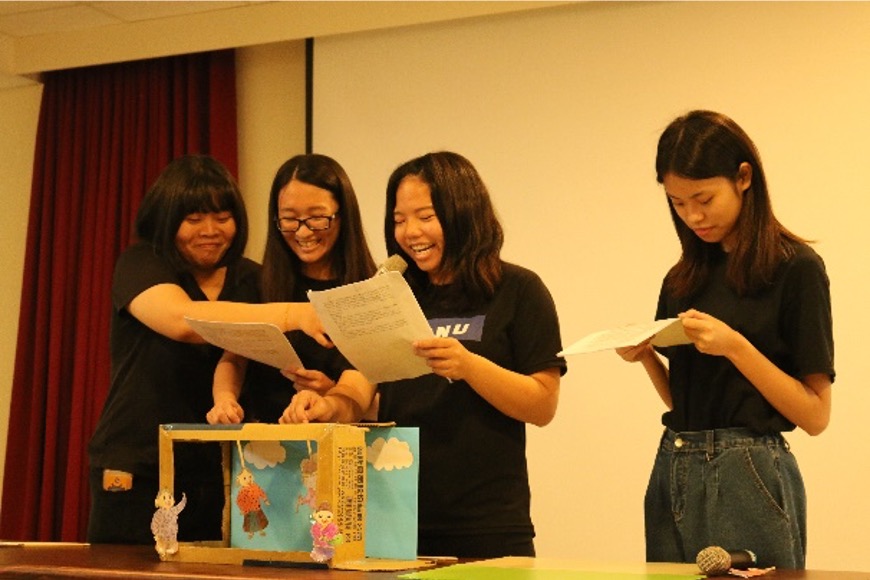
In this regard, storytelling practices have granted the Indigenous voices the possibility to endure and sustain their “lives,” despite the fact that they are gradually disappearing due to the ageing of the elders. Researchers such as Lim and Li recognised the importance of collecting histories, memories, and stories directly from the elders in the Kaxabu and Pazeh communities. They diligently transcribed and compiled these narratives into collections, which were then utilised as valuable teaching materials. By doing so, students could infuse innovative ideas and interpretations into the stories, revitalising them and ensuring their continued relevance and vibrancy.
The productions created by the students were not confined to being mere assignments or teaching materials within the university. In fact, they transcended these boundaries and reached a wider audience. For example, some of these productions were shared with elementary schools, allowing younger generations to experience and appreciate these Indigenous stories. Additionally, these productions were showcased at various cultural events, such as Pazeh New Year, held within the communities themselves. As a result, this approach breathed new life into the Indigenous stories, safeguarding them from completely fading away with time.
Beyond the Stories: Memories, Histories, and Cultural Heritage
Storytelling lies in its remarkable ability to bridge the present with the past, enabling individuals to revisit their histories, memories and cultural heritage across generations. For example, one popular theme in Kaxabu and Pazeh’s storytelling is the legend of the “daxedaxe (Huan-pô-kuí),” skilled individuals known for their bad witchcraft. Daxedaxe is rumoured to go out at night to harm others, specifically children. These tales have been spread everywhere in Puli, deeply ingrained within the collective memories of the local inhabitants.
The stories of daxedaxe have directly influenced cultural practices and local customs. Precautionary measures have become embedded in their cultural behaviours, manifesting in practices such as carrying children on their chests or by their sides and ensuring that baby diapers and children’s clothes are kept within the safety of their homes before sunset. The awareness of potential dangers associated with these supernatural figures has also fostered habits of refraining from venturing out late at night or returning home during nighttime hours. In addition, it is believed that daxedaxe fear authority figures, and if blessed with symbols of authority such as Japanese police hats or official positions, they can be directly confronted and killed. This may symbolically allude to the history as well as the traditional societal roles of women.
In 2022, Lim, Li and another professor Cheng-Fan Chen have collaborated with their students and the community elders, exploring the diminishing traditional skill of water hammering. The early Pazeh people even employed this ingenious hydraulic device to pound rice and make mochi. The rhythmic beat of the water hammer, driven by the continuous flow of water, echoes the ingenuity and resourcefulness of their ancestors. The elders’ storytelling unravels the ancestral knowledge embedded in the Pazeh communities, shedding light on their methods for securing water sources and the subsequent extension of water used for irrigation and daily life. They recognise the significance of the water hammer not only as a practical tool but also as a symbol of Pazeh’s history and an emblem of cultural pride.
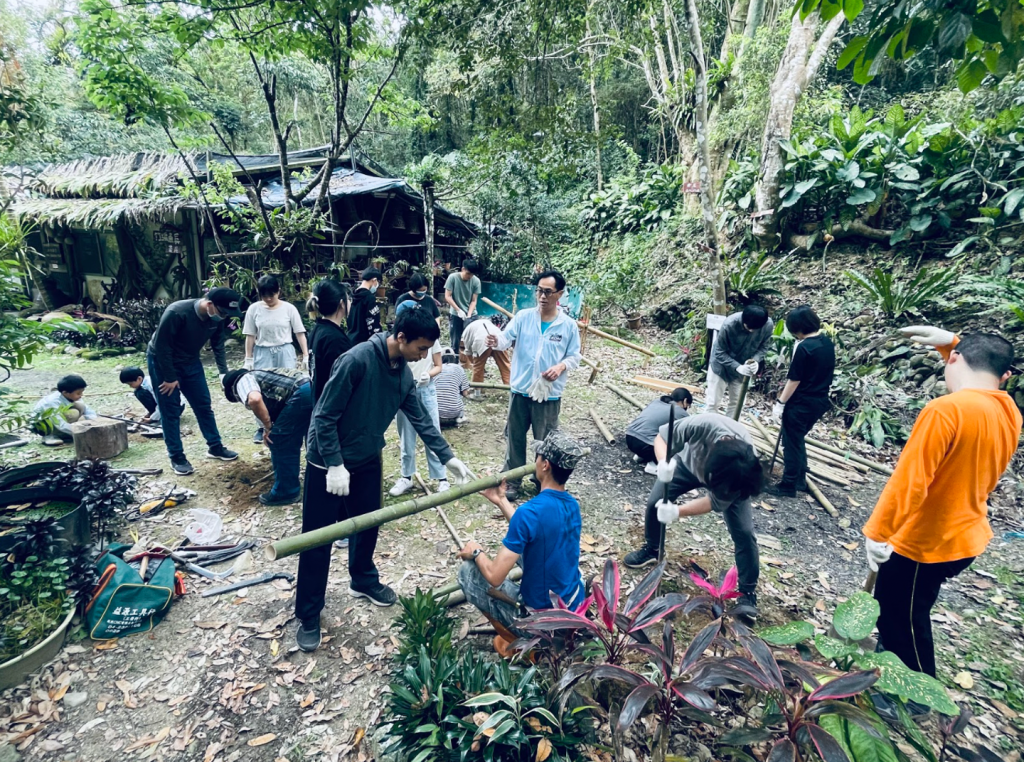
The collaboration among academics, students, and community members demonstrates the importance of storytelling in revisiting histories, memories, and cultural heritage. It is evident that preserving Indigenous languages and traditions extends beyond academic research and the confines of the university classroom. The ongoing retelling and adaptation of stories serve as a bridge between generations, fostering a sense of continuity and emphasising the value of safeguarding cultural heritage. As these stories continue to be shared, they play a vital role in preserving Indigenous voices and reinforcing the significance of cultural preservation.
Yi-Yu Lai is currently a PhD student in Anthropology at University of Hawaii at Manoa, USA, and he has studied the Indigenous resistance in the highland Philippines since 2014. Focusing on the issues of political violence and Indigenous politics, he has participated in countless academic, voluntary, and cultural exchanging projects in Taiwan, Hawaii, and the Philippines.
This article was published as part of a special issue on Indigenous storytelling in Taiwan.
 Taiwan Insight