How Much Money Could Ghosts Make? A Case Study on the Most Ferocious Female Ghost of Taiwan – Chen Shou Niang  

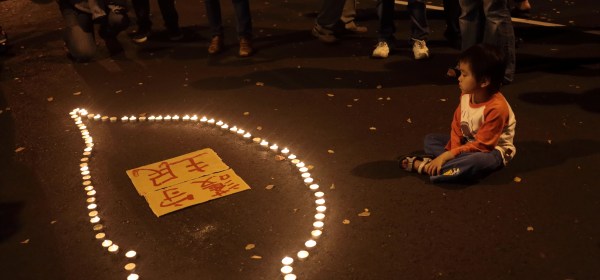
Written by Yi-Ping Wu. Staying at home, not going to the beach, or climbing mountains, and not even opening an umbrella indoors are just a few taboos everyone must remember when Ghost Month 鬼月 arrives. Although the origin of the concept of Ghost Month is uncertain, the Taiwanese still emphasize the rituals that must be practised and the taboos that must be prohibited during this period. What attracts our attention most is the colossal amount of money that the Taiwanese pay for the rituals, offerings, and joss paper (paper money) to honour their ancestors because their past loved ones could return to the world of living since the gate of the underworld would open on the first day of July on the lunar calendar. The huge income that the cultural concept of Ghost Month contributes reminds us of an interesting question to think about thoroughly: How much money the “ghosts” could make?

Han-Heterosexual-Male Supremacy across the Pacific? A Critique of The Taiwanese Reminiscence Acrobatic Show

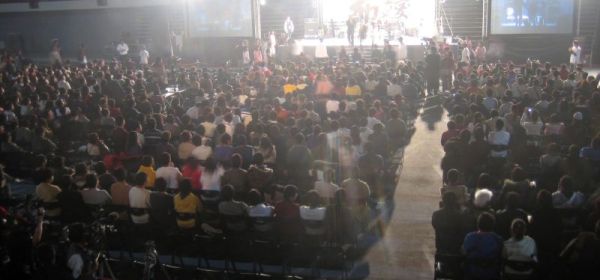
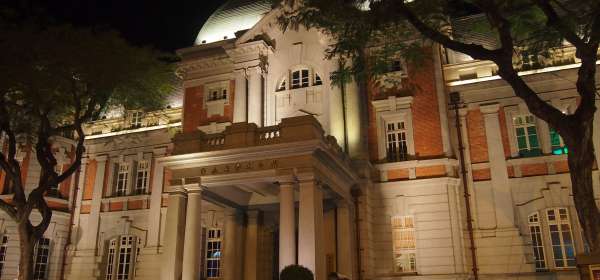
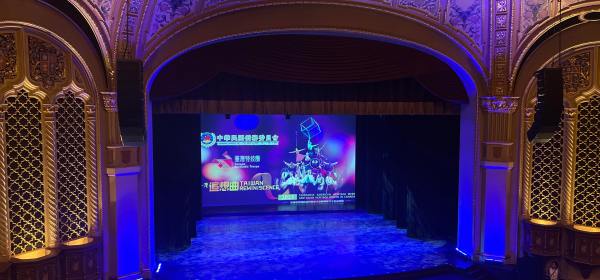
Written by Mark Hsiang-Yu Feng. Busy as usual was Highway number eighty, but Mother’s Day made downtown San Jose unexpectedly quiet. However, in front of the California Theatre, lively chat sounded out of the silence, marking this celebratory moment for the twentieth anniversary of the Taiwanese American Center of Northern California during Asian and Pacific Islander heritage month. Families came to fill most of the seats, and three languages—Hoklo Taiwanese, Taiwanese Mandarin, and English—were spoken to express the identity of these participants. To honour the culture of Taiwanese and Taiwanese Americans, the overall narrative of Taiwanese Reminiscence contextualises a mixture of stunts, acrobatic movements, and dance into a condensed representation of the twentieth history of Taiwan.

Leveraging Cultural Exports for Resilience: Insights from Taiwan and South Korea

Written by Tommy Hall and Margaret Siu. Global discussions about Taiwan often focus on an invasion scenario, and many observers wonder if Taiwan is adequately preparing for war. These discussions often dissect Taiwan’s hard power—military and economic factors that may dissuade Beijing. However, soft power is crucial in conflicts between imbalanced parties. Current discussion would benefit from diversifying outside hard power calculations and examining Taiwan’s soft power. Taiwan should apply lessons from South Korea’s model to bolster its ability to co-opt global support. Describing Taiwan’s soft power vision and comparing both nations’ top-down cultural promotion efforts is helpful.

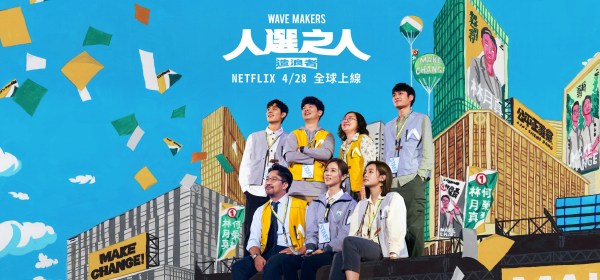
Wave Makers on Netflix: A Vision of Taiwanese Politics Not ‘Amid Tensions’  

Written by Chieh-Ting Yeh. “Wave Makers” (2023; ​人選之人-造浪者​) is a new drama on Netflix about political staffers trying to win a presidential election in the last few months of the campaign. This may sound like the premise of many television shows in the political intrigue genre, but it is the first of its kind from Taiwan to be available to a worldwide audience. The drama addresses various political issues relevant to contemporary Taiwan, including environmental concerns, energy policies, and workplace sexual harassment, reflecting the ongoing public debates on these topics. But it is glaring in what it is missing: Taiwan-China relations.

Taiwanese Literature Beyond Taiwan

Written by Chee-Hann Wu. On 12 March 2023, Taiwan lost to Cuba in a World Baseball Classic qualifier, eliminating the former from the tournament. For most people, Taiwan and Cuba are like two parallel lines with almost nothing in common except their passion for baseball. If you use “Taiwan” and “Cuba” as keywords for a quick Google search, the first ten pages are all about baseball, with a few random advertisements from travel agencies. What if the relationship between the two is more than that? What if the fate of the two countries is intricately intertwined? Huang Chong Kai’s The Formosa Exchange begins with such a premise.

Who are the Allies of the Chinese Communist Party (CCP)? Neologisms, Netizens, and Nationalisms 

Written by Hsin-I Sydney Yueh. Recently, Taiwan’s Ministry of National Defense rejected a Japanese news report suggesting a widespread tendency among retired Taiwanese military officials to “sell out” their country. Wu Sz-Huai, a retired lieutenant general and incumbent opposition KMT party legislator, was among those who denounced this allegation.  

“Are we Chinese spies (共諜)?” Wu angrily asked this rhetorical question during a session of the National Defense Committee at Taiwan’s Legislative Yuan on March 2, 2023. While Wu denied being a Chinese spy, Taiwanese netizens teased him by sharing a photo of Wu and other retired Taiwanese military officials attending a CCP-hosted event, where they had sat attentively and listened respectfully to China’s leader Xi Jinping in 2016. Wu’s use of the term “Chinese spies” reminds us of another similar expression in Mandarin Chinese: “allies of the CCP” (中共同路人). This expression has recently gone viral in Taiwan’s online communities, used for self-mockery and as an attacking label.

Innovating Tradition: The Interdisciplinary Practice of “Bodehi” Glove Puppetry Theatre in Taiwan 

Written by Chih-Ching Chester Tsai. Bodehi, Budaixi, or literal translation cloth sack theatre​ (布袋戲), is a form of traditional puppetry theatre in Taiwan. It was brought to Taiwan by early immigrants from southeast provinces of China during the Qing Dynasty. It has since developed into a unique form of theatre infused with local style and would later grow into one of the unofficial symbols of Taiwanese culture.​ 

The Intercultural Resonance between Taiwan and Q: A Night at the Kabuki (2022) 

Written by An-Ru Chu. In the second half of 2022, when Taiwan was gradually relieved from the waves of omicron subvariant-induced outbreak, the country experienced an unprecedentedly large quantity of theatrical productions and cultural events since many of them should have been presented earlier but rescheduled because of the pandemic. Meanwhile, a Japanese staged play, ​Q: A Night at the Kabuki, broke National Theatre (NT) box office record in Taipei. NT sold 12,000 tickets in merely twenty minutes for the first time in thirty-five years. When applauding the artistic achievement of the play per se, most posts also mentioned the following two aspects: first, the strong emotions evoked by seeing one of the leading actresses, ​​​​Takako Matsu, in person, which echoes how the show had extensively grabbed the media’s attention since last May.

Her journey to the Best Actor award: Taiwanese Opera performer Chen Ya-Lan made the history 

Written by Jasmine Yu-Hsing Chen. October 22, 2022, outside the Sun Yat-sen Memorial Hall in Taipei, ​Taiwanese Opera performer Chen Ya-Lan (陳亞蘭) astonished audience members on the red carpet for the ​57th Golden Bell Awards (GBA). This annual award honours excellence in television and radio programs created in Taiwan. As a female performer, Chen broke records with her Best Leading Actor Award nomination.

Whiteness Intertwines with Taiwaneseness: Taiwanese Heavy Metal Music and its Decolonial Paradox

Written by Mark Hsiang-Yu Feng. It is common to see that many Taiwanese musicians employ Western compositional concepts, theories, and approaches to express Taiwanese identity through music and musical performance. For example, during the 2020 presidential and general election in Taiwan, Legislator Freddy Lim, the vocalist of a renowned Taiwanese metal group called ChthoniC, gave a live concert called Taiwan Victory to congregate voters and solicit votes in front of Taiwan’s Presidential House. Many Taiwanese people showed interest in his performance, as he sang heavy metal songs to gather voters and fight against political infiltration from China. After the concert, The Guardian’s report highlights Lim’s unique career trajectory from a musician to a politician in Taiwan and the creativity of bringing music to the campaign. 

Where did the Greatest Art Piece Come From? From Taiwan’s Music Industry to Jay Chou’s Latest Album 

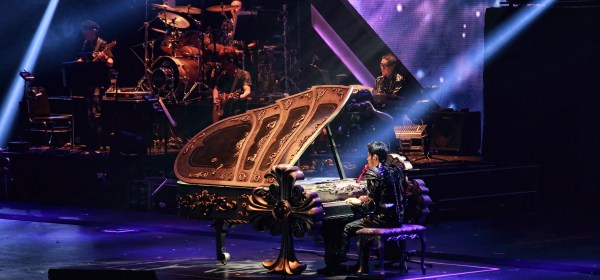
Written by Dr Chen-Yu Lin. his strategy to project Chineseness as a globalising project was best exemplified by Jay Chou’s appearance on the Nasdaq screen at Time Square in January 2019. He was voted the most influential Chinese singer on Kugou (酷狗), the Chinese streaming service owned by Tencent ( 騰訊). However, other than his name, the text shown on the Nasdaq screen alongside a photo of Chou is all in Chinese. Such a projection of a globalising Chineseness caters to the hopes of the well-educated and well-travelled Chinese newly rising classes.

A Possible Cultural-Political Alliance to Address Concurrent Struggles between Taiwan and Oceania: Music as a Means

Written by Chun Chia Tai. For many Indigenous peoples in Taiwan, music is a lively cultural medium that facilitates allying with other Austronesian peoples residing in Oceania. Such a musical way of fostering cultural diplomacy has currently been popular in Taiwan, especially after the release of the album Polynesia in 2014, emphasising the shared cultural genealogy of Austronesian under the collaboration of an Amis singer Chalaw Pasiwali and a Madagascar musician Kelima. In the same year, another project called the Small Island Big Song aimed to establish a network between Pacific Islands and Taiwan through music and film. Musicians in this project released their 2018 album Small Island Big Song and a sequential album named Our Island in 2021. Moreover, all these musical works focus on fusions of traditional folk music(s). Positive public perception reflects Taiwanese people’s rising demand for establishing a cross-Pacific Austronesian community between Taiwan and the Pacific Islands.

1 2 3 4 5