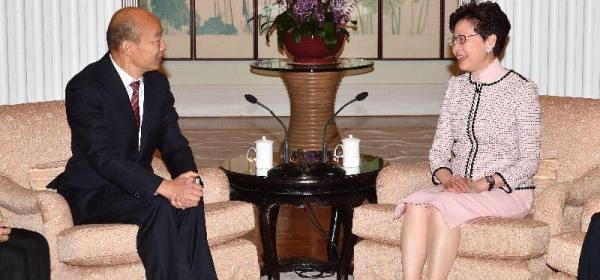
The Political Implications of Freddy Lim’s Recall Election

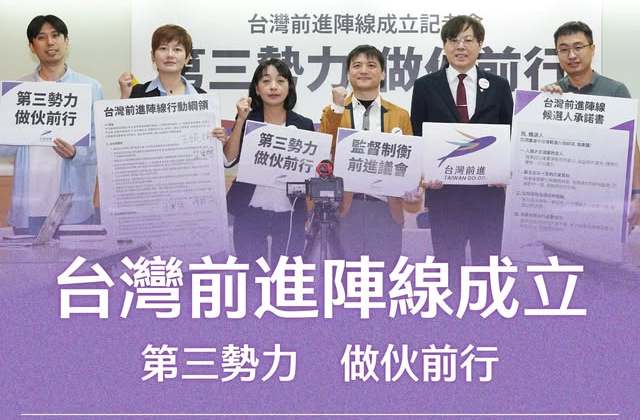
Written by Chieh-Chi Hsieh. In brief, the two ballots may be conveying a down-spiralling trajectory of KMT’s popularity and supporting rate. Yet, by observing the DPP government’s actions in the respective campaigns of Lin and Lim, one can explain the diverging results of the elections. Moreover, with pan-Green media (e.g. political talk shows broadcasted on 3 Set News, Formosa TV network) continuing to focus on Lu’s actions and connections with Yen after the by-election, it makes apparent that pan-Green groups have already begun their preparations for the 2022 local elections later this year.

The KMT, Ethnic Chauvinism, and the Freddy Lim Recall

Written by Michael A. Turton. Of course, ethnic chauvinism is not the only reason for the two recalls but given how rightist politicians spearheaded the recalls, it obviously played a role. Chen and Lim’s energetic, intelligent, self-aware Taiwaneseness was obviously provoking for a colonial elite whose ideological heart contains a powerful streak of racism and ethnic chauvinism directed at other ethnicities in Taiwan. Hopefully, discussions of Taiwan politics will shed more light on this key shaper of KMT attitudes toward Taiwan, and Taiwanese attitudes toward the KMT, especially among the young.

Comic Fandom Culture in Taiwan: How It All Started.

Written by Hui-Hua Lu. The comic and animation fan culture in Taiwan may have started by accident, but now it is lively and energetic with comic conventions and online platforms that offer spaces for people to participate and a channel to express themselves. The fan culture in Taiwan started around the 1990s when 大然出版社 (Da Ran Publishing) in Taiwan first added the comics created by Japanese fans of Saint Seiya (聖鬥士星矢, sheng doushi xingshi in Chinese, 聖闘士星矢, セイントセイヤ in Japanese) at the end of their publications of the same comics.

Searching for Taiwan’s Flavour: An Introduction to the series

Wrtitten by Po-Yi Hung. Where is the border of a country? To answer this question, we will often open a world atlas – or a national map of a specific country – to look at the boundaries drawn on the map. While we consult a world atlas or a national map to locate the borders of countries, we probably will also notice some “unsettled” borders between different countries. As you may have known, people have different opinions in drawing the borderline between Taiwan and China.

Crops, Houses, or Panels? The Land-Use Conversions of Taiwan Farmland

Written by Tsai Chia-Shen. Decades after opening to free trade, Taiwan’s food sufficiency rate has slid and maintained between 30-35% after 2003 (CoA 2020), reflecting a severe food insecurity status that has raised public concern over the quantity and quality of farmland. Although referring to other lately industrialised countries, it is prevalent that the agricultural share of GDP shrinks in the history of industrial transition, the decrease of employment in the agricultural sector still indicates the risk of losing food security, food sovereignty, and even State sovereignty.

The “Fruits” of Open Source: The Story of Open Hack Farm 

Written by Sam Robbins. As alternative food movements continue to develop and food politics has risen higher on the political agenda in Taiwan, there is perhaps still more opportunities for growth and collaboration between those concerned with the future of how food is produced in Taiwan. For Chen, the primary concern is still sustainability and environmentally sensitive agriculture. Open data and open technology is just a means to the broader end of preparing Taiwan for an increasingly unstable climate future. 

Food, Politics and Solidarity Economies in Taiwan

Written by I-Liang Wahn. Food plays a central role in Taiwanese culture, with the evolution of Taiwanese cuisine mixing multiple historical influences and constituting unique identities. But food is also increasingly a political topic and a field for solidarity economies. The politics of food was especially brought to the fore in three developments last year: a series of political events around food, the celebration of a milestone by two independent food media, and an academic conference devoted to food activism.

Taiwan’s New South Bound Policy 2.0: Fine-Tuning in 2022

Written by Raian Hossain. Apart from South Asia, the role of cultural exchange between ROC and all New Southbound countries needs to be emphasised further. Exchange of cultural activities such as film or food (cuisine) festivals would be good to create bondage among the people of Taiwan and New Southbound countries. Also, environmental and climate change are pressing non-traditional security aspects that might create further cooperation ground between ROC and New Southbound countries. Like how the Tsai government is committed to domestic green energy, ROC should share such ideas and efforts among New Southbound countries

How did Malaysia and Taiwan respond to Covid-19? Part II: Pandemic’s Impact on Economy

Written by K. Thiruchelvam. Our earlier article described how governments in Malaysia and Taiwan have responded to the challenges of the COVID-19 pandemic on their health systems. We identified common themes from both countries’ responses to the pandemic and acknowledged the importance of public sector capacities and capabilities in shaping and steering them. This second part of the article will describe how governments in Malaysia and Taiwan have responded to the challenges of the pandemic in their economic sector. 

How did Malaysia and Taiwan respond to Covid-19? Part I: Healthcare Infrastructure

Written by K. Thiruchelvam. Why have some countries responded to the COVID-19 pandemic more decisively than others? How have seemingly under-resourced countries performed better—in terms of the number of cases and fatalities—than their richer counterparts? These and other vexing questions have continued to confound many of us as we enter the third year of a pandemic that has brought governments all over the world to their knees. 

Two Young Indigenous Scholars are Promoting Indigenous artists – in Taiwan and Beyond.

Written by Fanny Caron. Lin and Ismahasan’s academic disciplines and the career path they have chosen to highlight a change in Taiwan Indigenous studies on an international level. These choices enable them to play a part in shifting the discourse on Indigenous Peoples from “objects” of study to active “subjects” of their own (counter-) narrative, supporting their affirmation of Indigeneity and tribal sovereignty.

1 61 62 63 64 65 134